How a garment is made
A knit garment passes through eight stages: yarn, knitting, fabric processing, cutting, stitching, decoration, quality checks, and packing and dispatch. Here is what happens at each one.
-
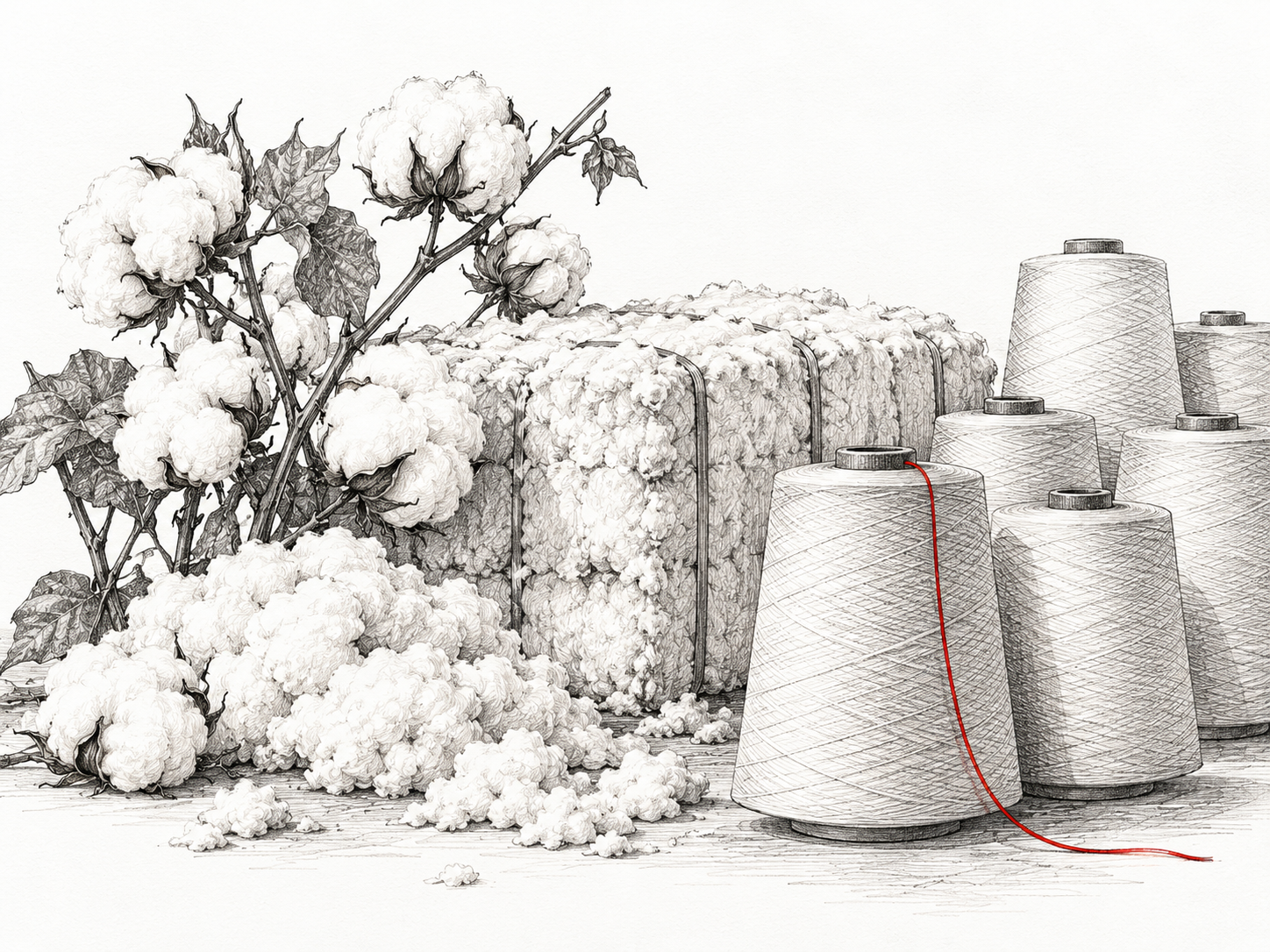
Cotton and yarn
Every garment starts with the yarn: its fibre, count and quality decide how the fabric will feel and wear.
-
Pencil sketchKnitting, pencil plate process/knitting.pngKnitting
Circular knitting machines turn yarn into tubes of fabric in the structure the garment needs: jersey, pique, fleece or rib.
-
Pencil sketchFabric processing, pencil plate process/fabric.pngFabric processing
Fabric is dyed, finished and checked for weight (GSM), shade and shrinkage before it reaches the cutting table.
-
Pencil sketchCutting, pencil plate process/cutting.pngCutting
Layers of fabric are laid, marked to the pattern and cut into panels for every size in the order.
-
Pencil sketchStitching, pencil plate process/stitching.pngStitching
Panels are joined on overlock, flatlock and single-needle machines into finished garments.
-
Pencil sketchPrinting and embroidery, pencil plate process/decoration.pngPrinting and embroidery
Logos and artwork are screen-printed, embroidered or heat-transferred, subject to the method that suits the design.
-
Pencil sketchQuality checks, pencil plate process/quality.pngQuality checks
Garments are measured and inspected against the approved sample, then ironed, folded and tagged.
-
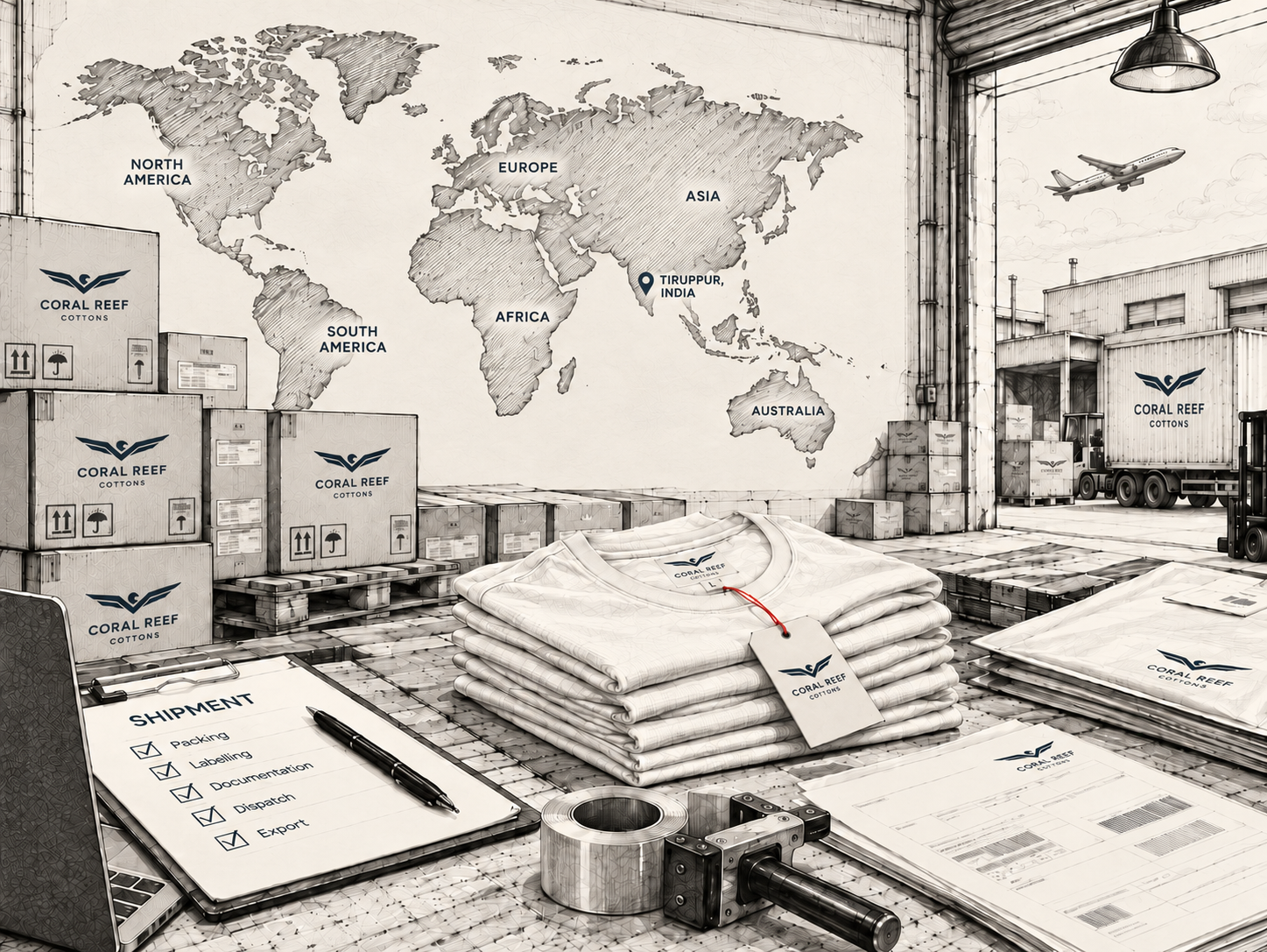
Packing and dispatch
Orders are packed in cartons to the agreed method and dispatched to your address or port.